

Winter

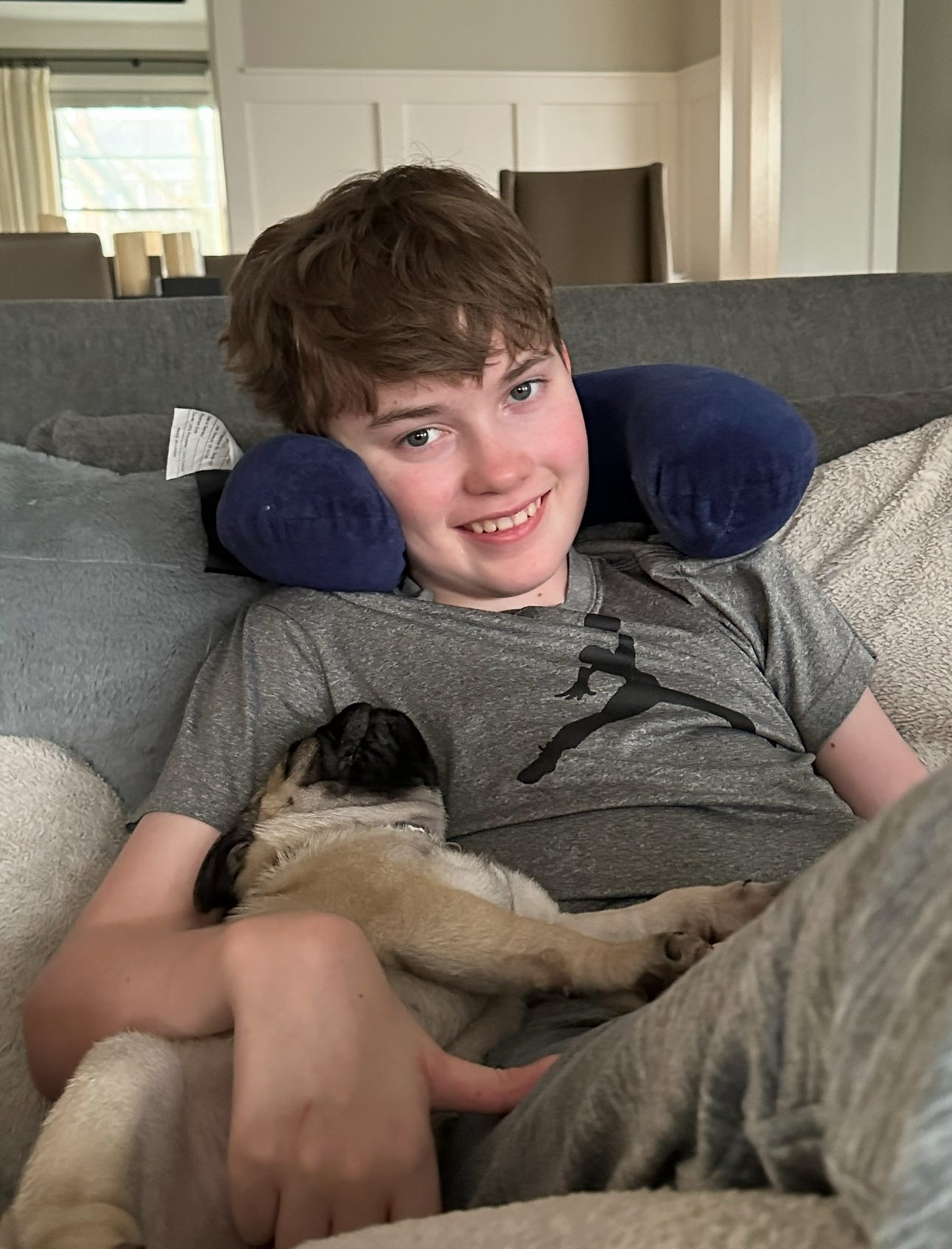
I used to wonder why life on earth has to be so hard.
In the four months since Brady died, I have struggled more with the level of suffering and loss he endured than with his death itself. I can accept death. I can accept that he is whole and free. I can accept that I will see him again. But what lives in my head rent free are the things he endured on the road to Heaven.
These thoughts linger even on days that feel almost okay, when you catch yourself laughing, running errands, answering texts, and then suddenly remember the enormous weight of losing your child. It lives there constantly, just under the surface. I rarely ever stop thinking about Brady. Today I was on a treadmill at the YMCA next to my girls, overlooking a basketball court. It was filled with little boys playing together, falling over, missing shots, laughing. For a moment, I let myself imagine that had been his life. That he was 10 again, down there with his friends, sweaty and loud in pajama pants, carefree on a snow day. But this was not his life. I turned my music up and kept running. (Badly. It’s been ten years.)
We still enjoyed our time together. We joked. We got some exercise. We moved through an ordinary afternoon. But the entire time, there was that running grief narrative in the background that I can’t seem to turn off yet. Somehow, I am still standing.
I never would have chosen the path we walked. But with each step away from it, the more clearly I can see how hard things shape us. The hardest things we experience don’t just wound us; they deepen us. They make us braver, more compassionate, more rooted and stronger than we were before the adversity arrived.
Years ago, we planted a tiny tree sprout from my backyard into my dad’s front yard. I loved the symbolism; a living thread between two homes, two seasons of my life. A small act of connection, growing slowly year by year.
More recently, Eden fell in love with a tree in Art’s backyard. This spring, we gathered some of its little helicopters so we could plant one, just like that earlier transplant; a piece of his yard carried into ours. My girls love their trees. They name them like giant, leafy pets.
We have a giant sycamore in our backyard named Rebecca. Rebecca holds three bird feeders that keep our chickadee colony happy. In the summer, she gives us the perfect shade canopy over our patio. We put seeds out for two ducks who stop by daily at her base. In the winter, she can be more complicated: I raked up seven giant yard bags of her leaves in January. But the girls love Rebecca’s leaves too. They are enormous and beautiful, and every fall we save a few especially perfect ones as they begin to drop.
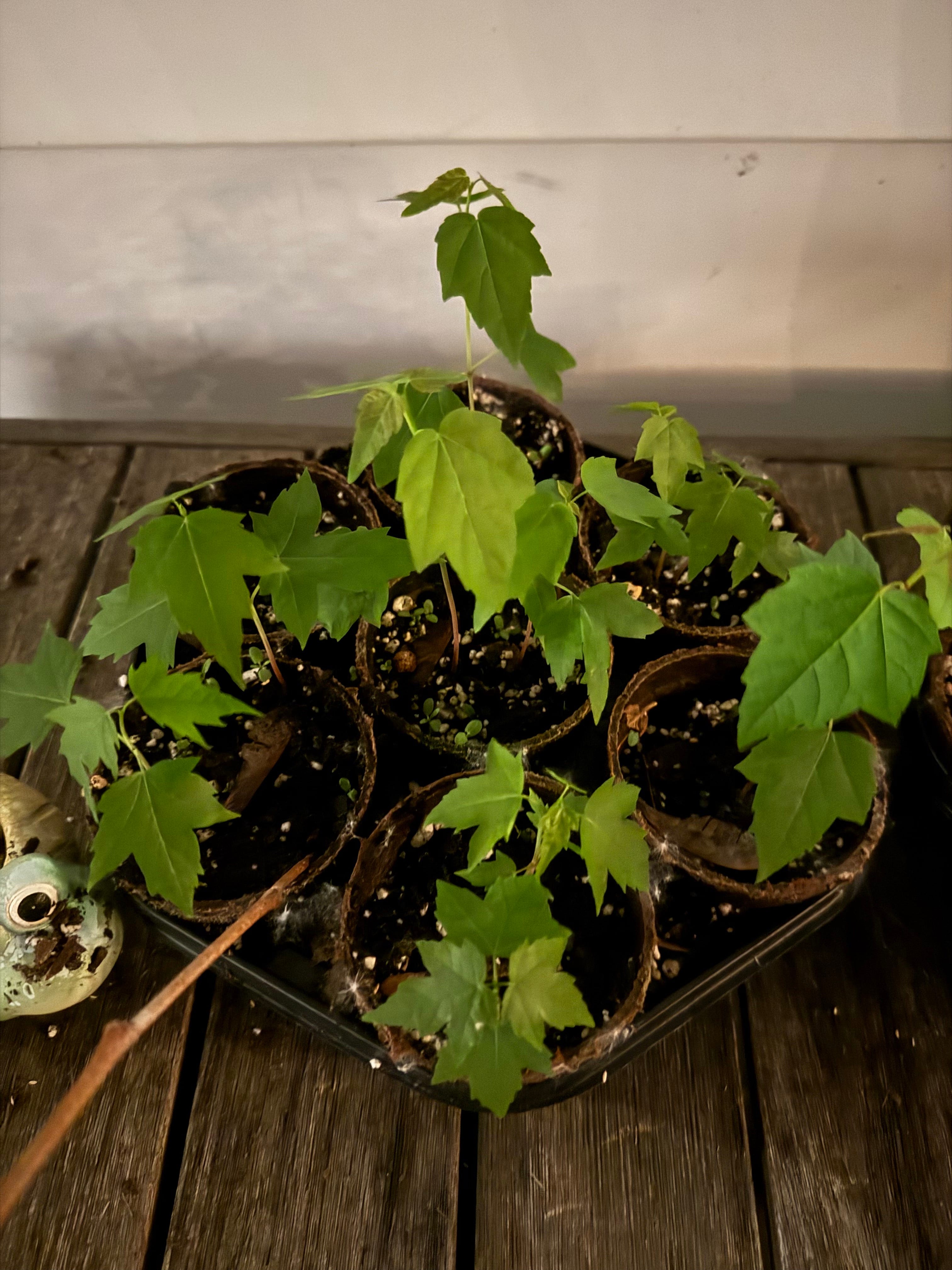
Our baby maple sprouts were carefully tended to and grew all spring and summer with Rebecca looking over them. By fall they were thriving. With winter approaching, and with some sentimental attachment to them since we had planted these seeds with Brady, I did what any mom would do: I tried to optimize the process. By then we were pretty invested in these little sprouts. I planned to buy a small indoor grow light so we could bring the seedlings inside for the winter and keep them safe from the cold and frost. I mentioned this plan at my favorite plant store, asking for advice on which light to buy, only to learn my plan was shortsighted and would likely kill our baby maples.
Maple trees need winter. They need the cold to trigger dormancy and reset their growth cycle. The freezing temperatures signal the tree to slow down, conserve energy, and build the resilience it will need for spring. A tree kept cozy and warm indoors doesn’t get that signal. Instead, it pushes weak, confused growth at the wrong time. What looks like protection actually sets it up for failure.
A tree shielded from winter becomes a weaker tree. Of course it does. Every word I have ever studied about the purpose of suffering points to this.
And still, I would have chosen a different story for Brady if I could have. I would have chosen a different story for our family. I would have traded places with him, and Michael would have, too. I would have chosen ease. Health. A life untouched by hospitals, insurance battles, and the long, slow losses that marked his seventeen years. I would have chosen tee ball and Boy Scouts and high school dances and track teams, sleepovers with his friends, and me crying as we dropped him off at Notre Dame. But this is not the life we were given.
While I would undo his suffering in a heartbeat, I cannot deny what our winter did.
It made Brady unbelievably brave.
It made him tender and aware of other people’s pain.
It made him endlessly funny in even the darkest moments.
It made him grateful for the smallest joys.
It made him outrageously generous and deeply attuned to what mattered. It made him patient and kind.
It changed me, too. It changed all of us. I am not remotely who I was before this. I am more fragile in some ways; I am still reeling from Brady’s death, and maybe that is to be expected. But I am also more compassionate. Less distracted by trivial things. More aware of how fragile and utterly important every ordinary day is. I can see clearly now the strength and growth a proverbial winter can force.
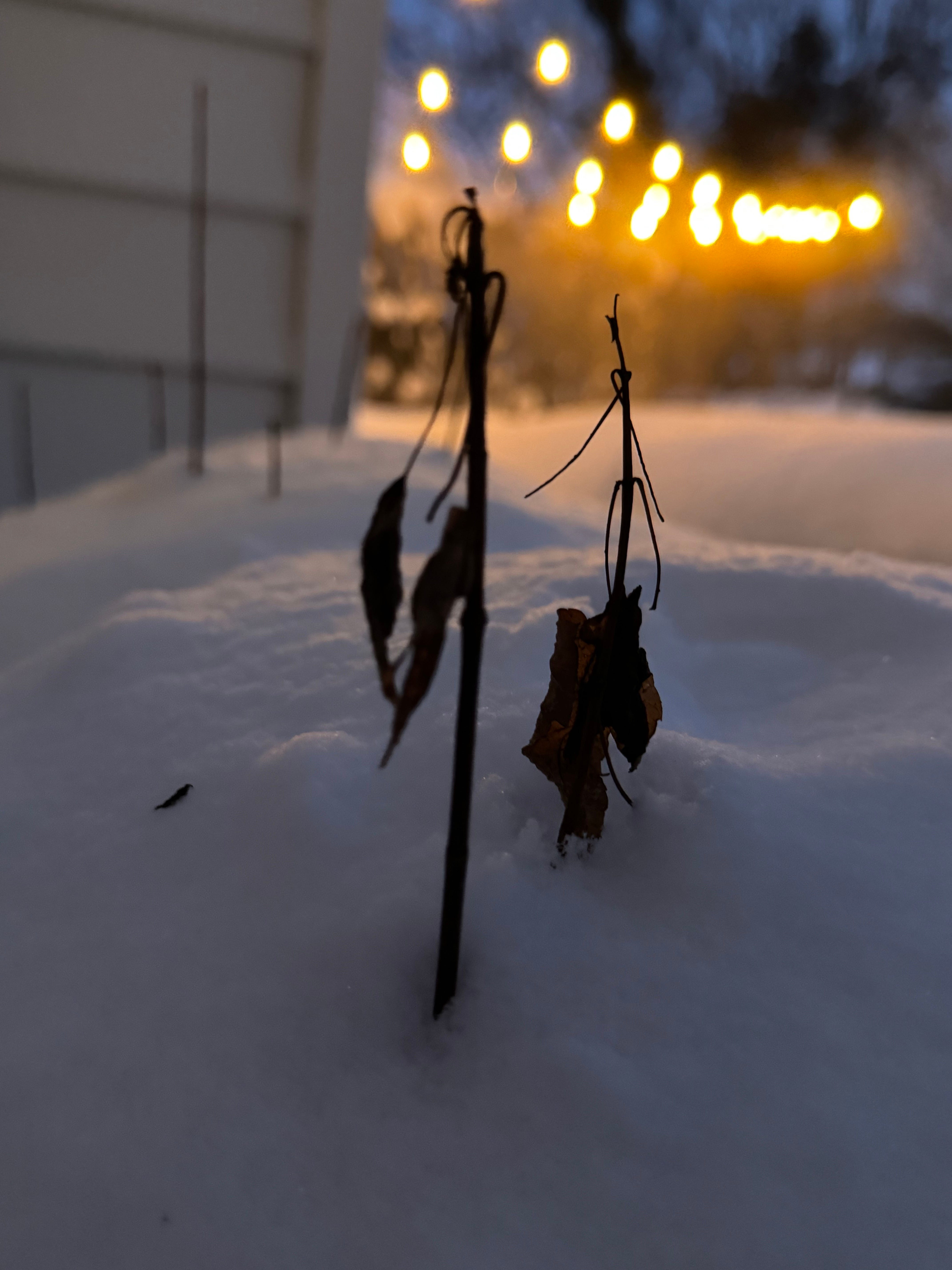
Watching our tiny maple trees outside this winter, leaves gone, stems thin and fragile against the snow, the instinct is still to brush the snow away, to keep the cold from touching something so small. But then you have to walk away and remember: this is how they become what they were meant to be. Not in spite of the winter, but because they lived through it.
Some winters still take the tree. I know now that not all of them will make it. Brady’s winter made him brave. It made him compassionate. It carved depth and humor and tenderness into a boy who already had the most beautiful, exquisite, irreplaceable soul. I cannot fully express what a truly extraordinary human this child was. He was beyond remarkable. And still, his winter did not spare him. Even the most incredible strength and growth and tender life lessons do not guarantee a miracle rescue or our earthly survival.
When Brady died, we were stunned. It still feels incredibly abrupt. After so much suffering, so much effort, so much fighting to keep him here, this was the ending? Even as the designated family optimist, I struggled to understand how to hold that reality. I didn’t try to pretend it made sense, and really needed some time to wrestle with it.
What I know now is this: the hard things were not arbitrary or meaningless or some horrible cosmic mistake. They made his short life profound. They did not steal his beauty; they revealed it. The hard things did not win. They shaped him. And they are still shaping us.
I'm so humbled by your humility. Thank you for sharing Brady with us all. To write with such beauty and clarity is a fine craft. To inject such light and grace when you've lost someone so precious gives us all a lesson in humility. I hope Brady's tree continues to grow in the same way your memories do.
I am so very sorry for your loss. Brady sounds like a wonderful human being. I’ll bet his life made a difference in many others lives.