

1+1=3…collaborative space between the artist and the viewer
The Everyday Philosopher

When I first loaded a roll of film into my camera to begin my photojournalism career in the early 1980s, New York City was a sprawling, chaotic canvas. I had the profound privilege of navigating that canvas (and also Washington DC) under the guidance of my mentor, the late, great documentary photographer Homer Page - https://en.wikipedia.org/wiki/Homer_Page
Page - as we all called him - was a master of the human condition, a man who understood that a camera was merely an instrument; the true medium of photography was the human mind. Of all the wisdom he imparted to me during those formative years, one specific training exercise fundamentally altered how I saw the world: the equation “1+1=3.”
The premise of 1+1=3 is both elegantly simple and endlessly complex. Page taught me that when you place one photograph next to another, their juxtaposition creates a third photograph—one that exists entirely inside the mind of the viewer. This alchemy happens because the human brain is intrinsically wired to seek meaning and pattern. For this visual mathematics to work, there must be a connective thread between the two frames. It might be a mirroring of composition, a shared geometric pattern, a thematic subject, or even a glaring, deliberate lack of any obvious connection, which forces the brain to bridge the cognitive dissonance.
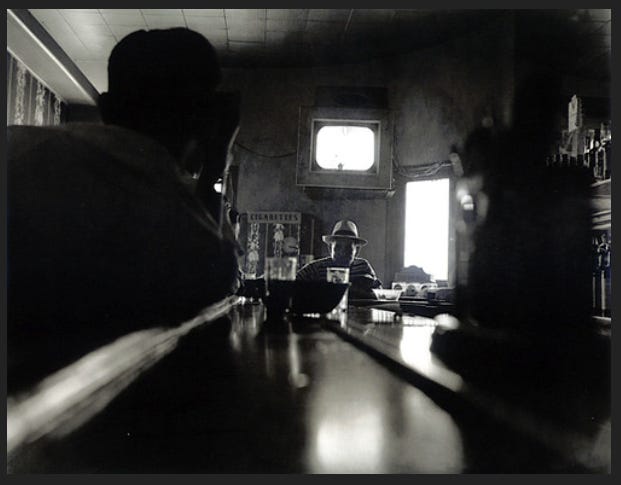
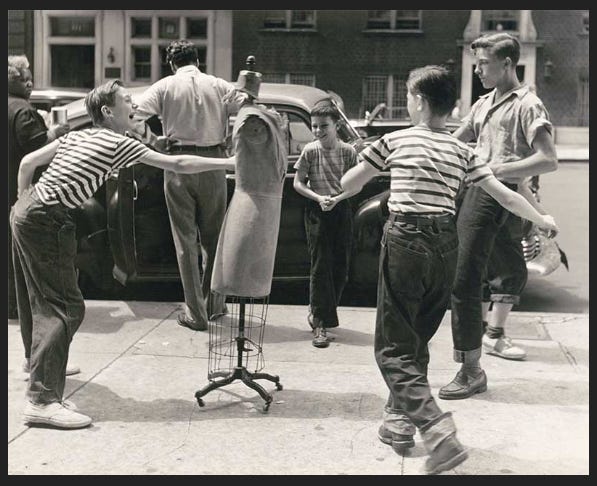
Page used this exercise not just to teach me about editing and sequencing, but to change how I shot in the field. He wanted me to understand that a photojournalist does not merely document; a photojournalist communicates. By anticipating how images speak to one another, I learned to embed layers of visual vocabulary into every single frame. When a photographer understands the context of the unspoken “third image,” they begin to leave deliberate space within their single photographs for the viewer’s imagination.
This is the ultimate goal of the exercise: turning the viewer from a passive observer into an active collaborator. When the viewer makes the connection between two images, they experience a spark of realization. They “solve” the visual puzzle. In that fleeting moment of synthesis, the artistic expression is no longer solely the photographer’s dictation; it becomes a shared emotional truth, deeply appreciated by the viewer because they helped construct it inside their own psyche.
To illustrate this, I often look back at a diptych from my own collection, shot during the mid-1980s. The first image is a tight frame taken of a woman who lies curled in the wild grass above the sea, eyes closed, her body turned toward the surf she cannot quite see, as if caught between memory and tide. On the right, another woman sits alone at the water’s edge, facing the restless horizon while small waves erase and redraw the shoreline around her. Together, the two frames suggest a single, unfinished story—maybe of the same woman, maybe of two strangers—suspended in that thin interval before and after the shutter, where any narrative the viewer invents is as provisional and changeable as the ocean itself.
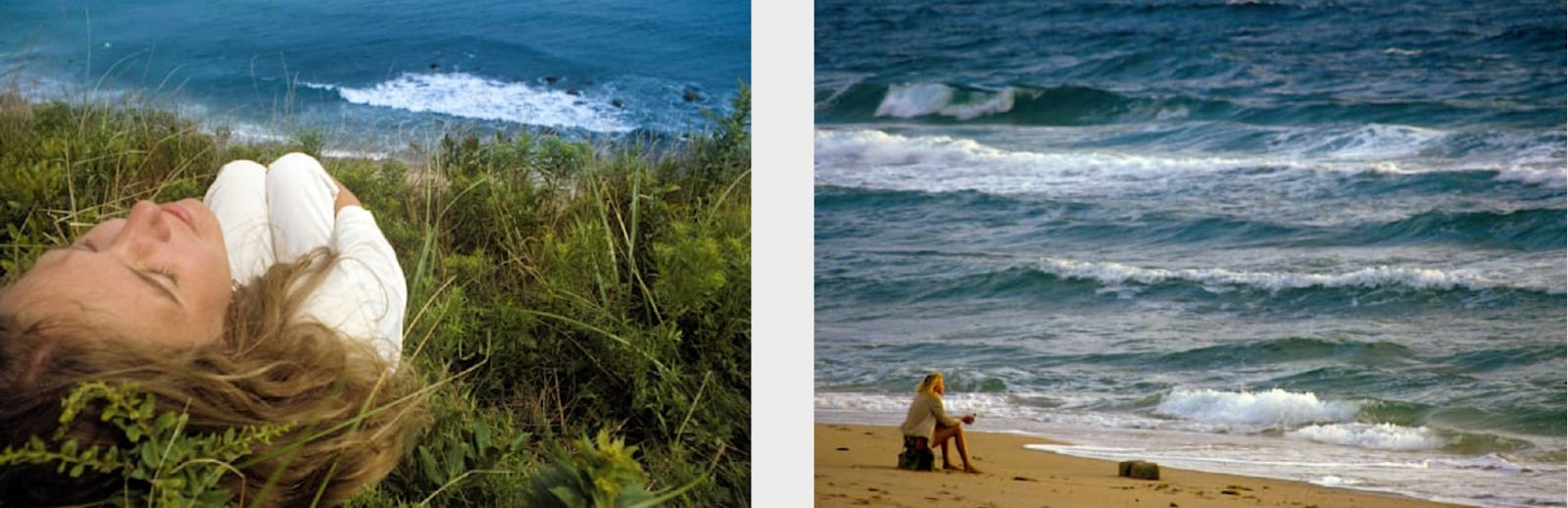
When you look at these women , you see dreaminess and oddity of position in relation to the sea. But when placed together (1+1), the third image (3) emerges in the mind. The viewer instantly draws a parallel between the primal force of nature in the waves, and the distance one woman has from this dynamic force and the closeness the other has which suggests two ways to “enjoy” the ocean. The aesthetic connection—the chaotic composition and the open, shouting themselves in different ways—allows the viewer to arrive at a deeper commentary on human nature without me having to write a single word of caption.
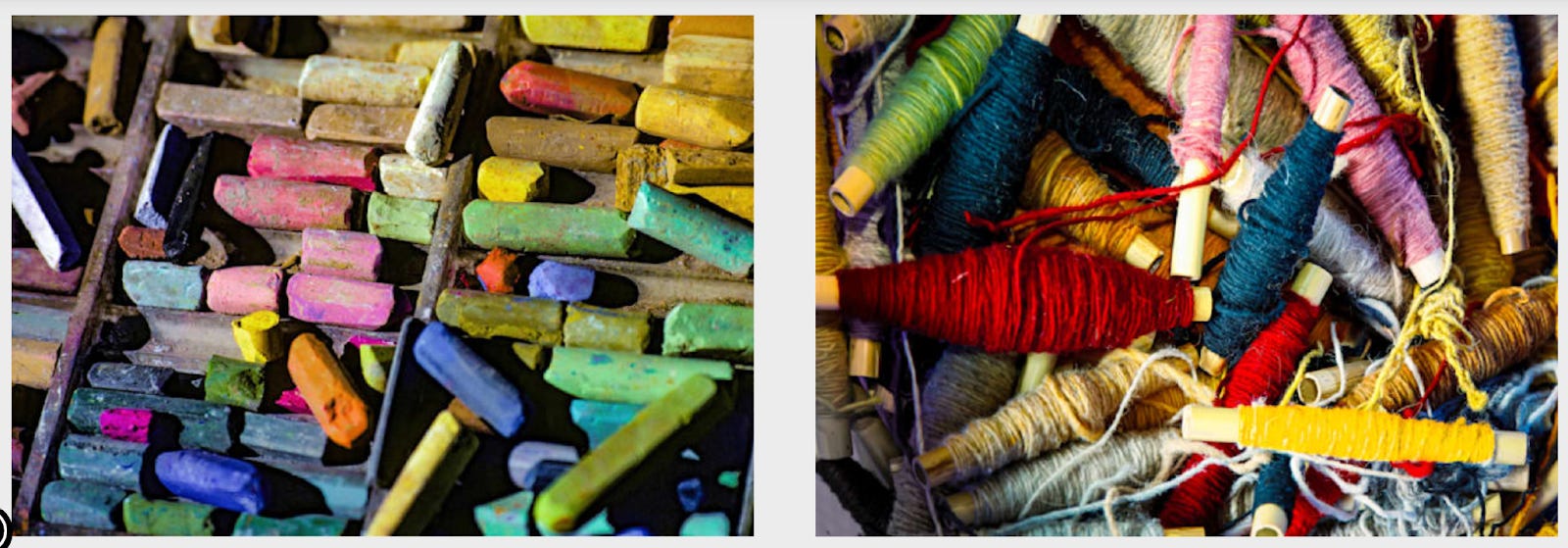
Another example from my archive relies on texture and composition rather than action. On the left, worn sticks of Parisian sidewalk chalk lie jumbled in their wooden tray, every broken edge and dusted groove hinting at pictures that have already washed away in last night’s rain. On the right, tight skeins of dyed wool wrap around bobbins in a Oaxaca, Mexico weaver’s workshop, threads crossing and tangling in colors that may or may not ever meet on the loom. Seen together, these tools of two distant trades sketch a single, unfinished image in the viewer’s mind—part drawing, part tapestry—yet whatever story joins them lives only in that instant between the shutter’s click and the imagination’s response, beyond the photographer’s reach and different for every pair of eyes that lingers here.
There is no geographic or narrative link between the two. Yet, side by side, the deep fissures in the chalk perfectly mimic the coarse hand-spun bobbins of wool. The third image created in the viewer’s mind is one of environmental and human extraction. The viewer realizes that the toll taken on the chalk to produce the art is mirrored exactly by the toll taken on the wool which is changed from its rawness into the beauty of the woven result which could both possibly be “seen” by the viewer in their mind’s eye. who labor. The connection is a shared exhaustion—a visual rhyme that evokes empathy.
Page knew that people rarely remember exactly what they see, but they always remember how a sight made them feel. He was teaching me the art of photojournalism - printed story telling - by teaching me 1+1=3. He taught me to photograph not just the subjects before my lens, but the invisible threads that connect the images together into the story as well as the connection to us all. It was the greatest gift a mentor could give: the understanding that the most powerful photograph in a story is the one that is never actually printed, but is felt deeply within the collaborative space between the artist and the viewer.
1+1-=3 was an immediate attention grab for me. Wow. I'm so glad I stopped to read this. It is so beautifully written. Your words are as beautiful as the photographs. The empty space you leave for the imagination is a powerful concept that I resonate with deeply. Thank you.
Now you have taught me. I have been an avid photographer since I could point a camera. I am very appreciative and impressed by this concept and the way you present it. You are a talented writer as well. Thank you.